Photographer George Barberis Shoots Modern Home in Bend Oregon
Sally Bjornsen
Light, Held Steady: George Barberis Shoots a Modern Home in Bend
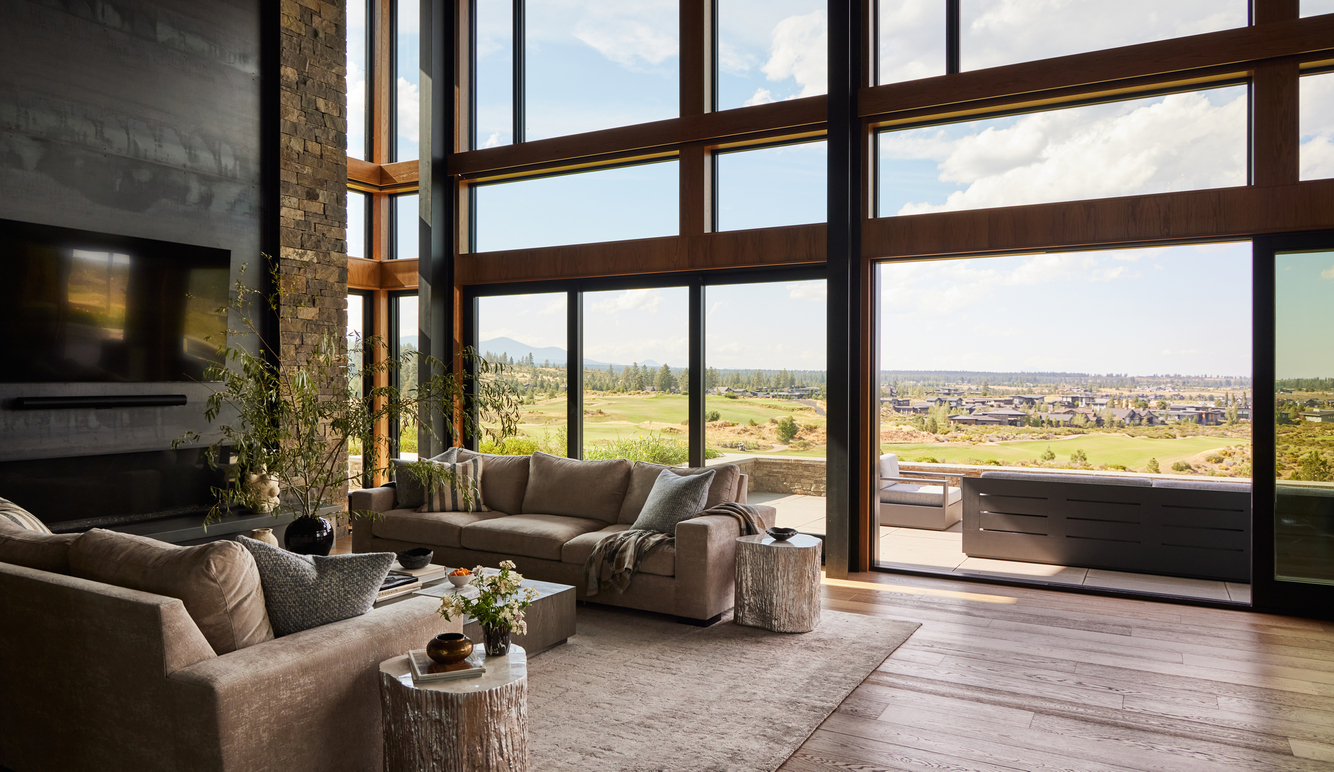
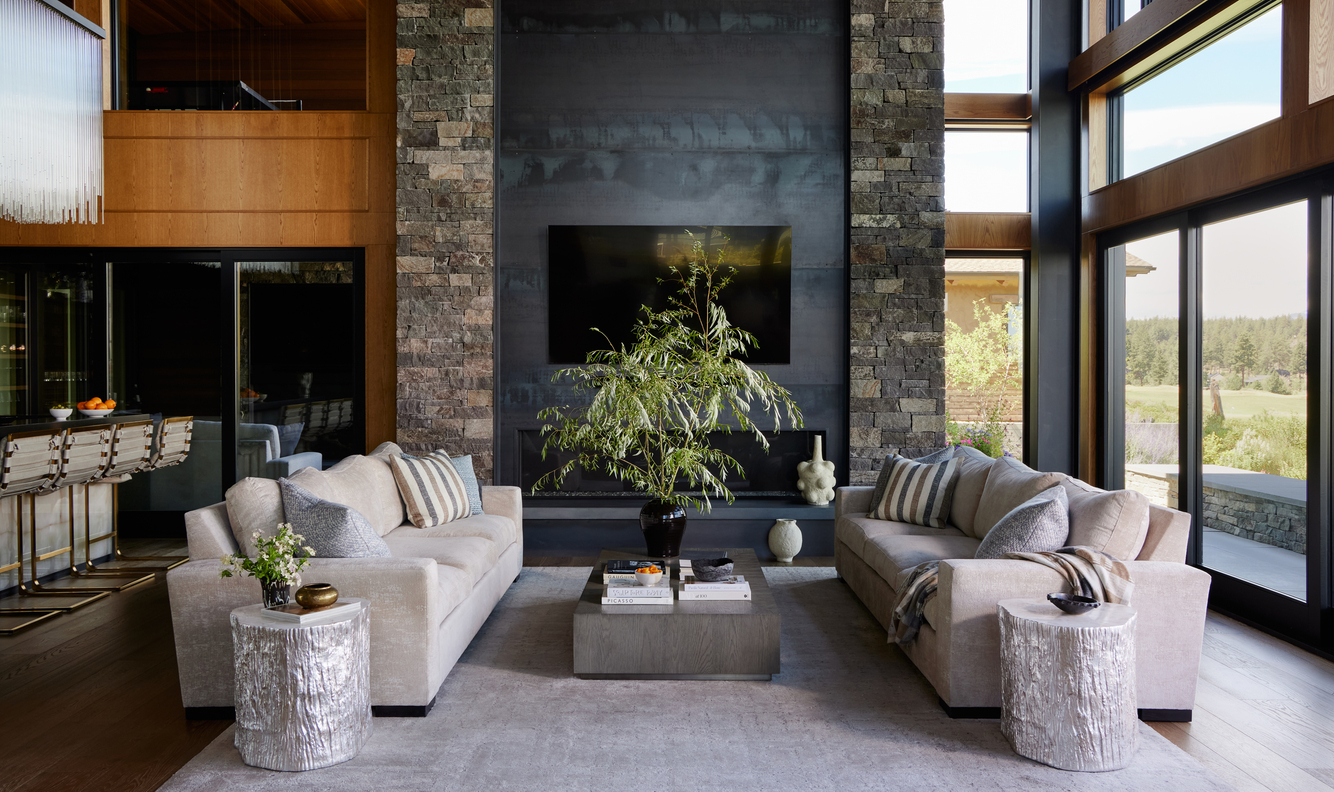
Look through George Barberis's photographs of this modern home in Bend, Oregon, and the first thing you notice is how the light behaves. High-desert sun pours through two-story windows, and yet the dark stacked stone, the blackened-steel fireplace, and the warm walnut all keep their richness and detail. The bright view and the moody interior coexist in the same frame, perfectly balanced. That control is the quiet signature running through the entire set.
Barberis is a Portland-based photographer who shoots interiors, architecture, food, and still life for ad agencies, brands, design studios, builders, and shelter publications. He trained early under established still-life and interior photographers, and that grounding shows—he's known above all for his command of light, and for a styling discipline that keeps even the most polished rooms feeling lived-in.
The House
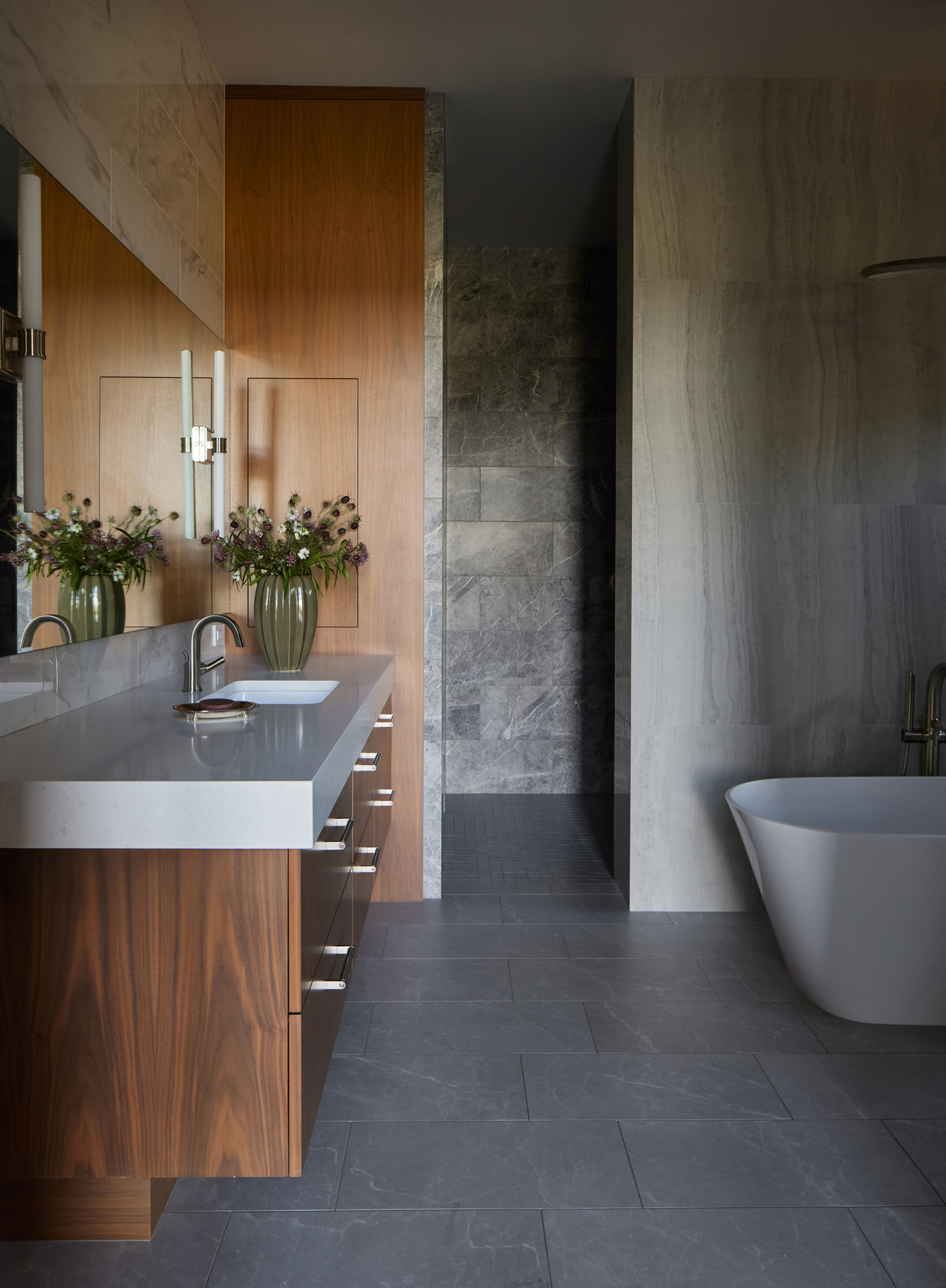
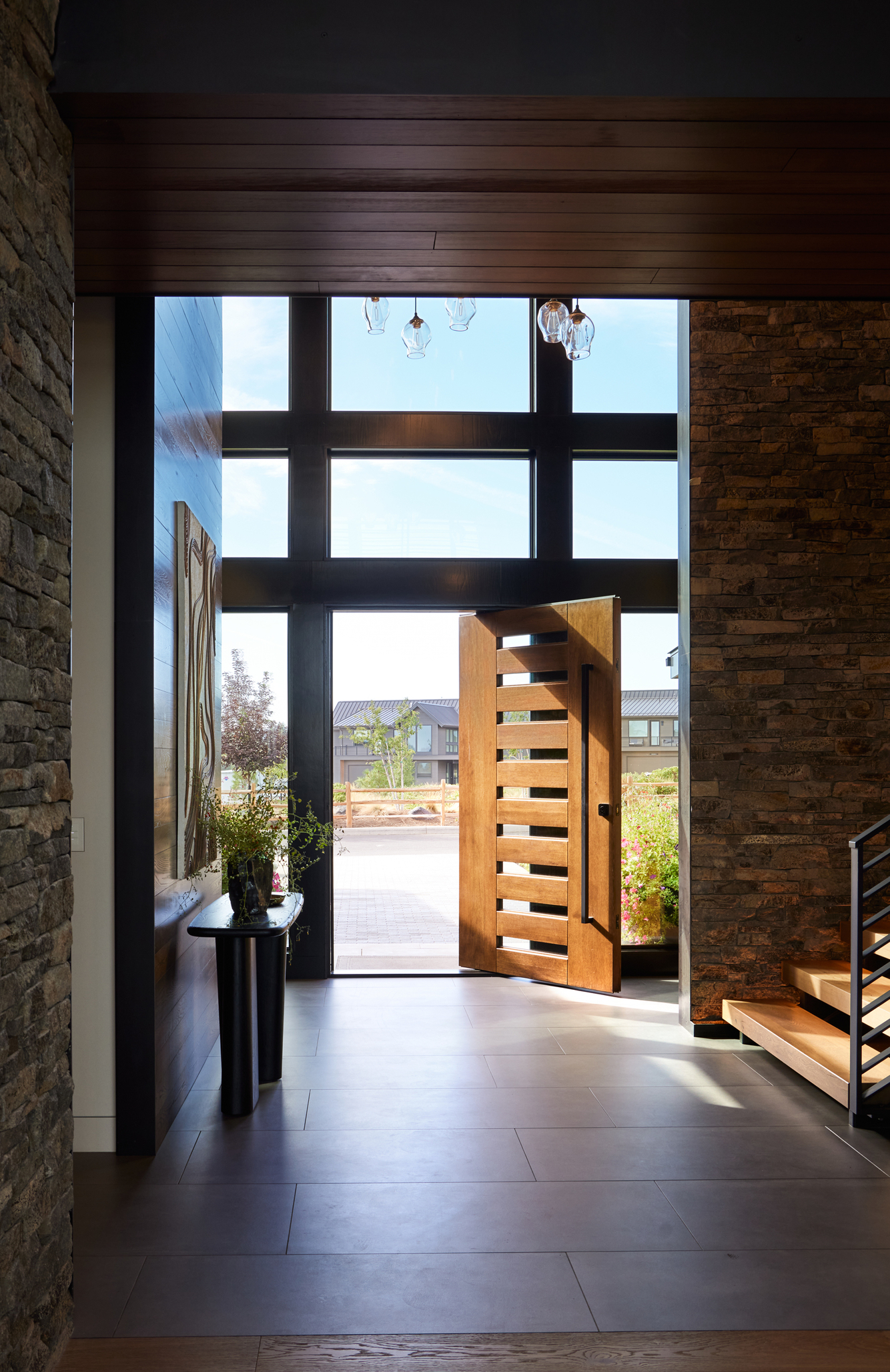
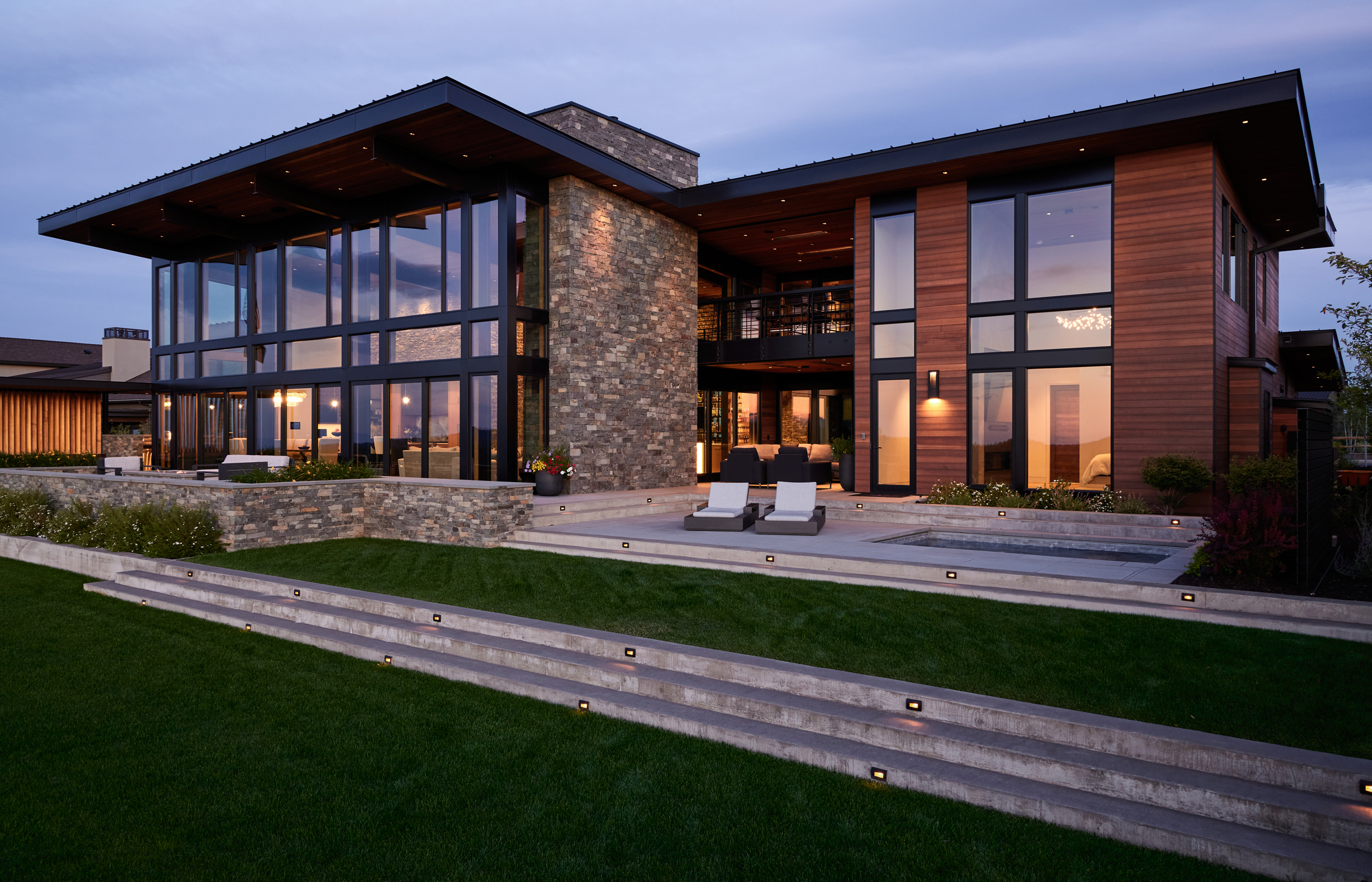
The home is the work of Van Tassel Architecture & Design. known for high-end custom residential work. Their guiding idea—architecture that is authentic to its materials and place—is everywhere in this Bend residence: a contemporary high-desert build of horizontal cedar and flat, floating rooflines, set into a golf-course landscape with forest and fairway views in nearly every direction. Inside, it's a study in contrast, stacked stone against blackened steel, walnut against pale quartz, soft neutral upholstery against hard mineral surfaces.
What Barberis does with it is more than documentation. A few choices stand out.
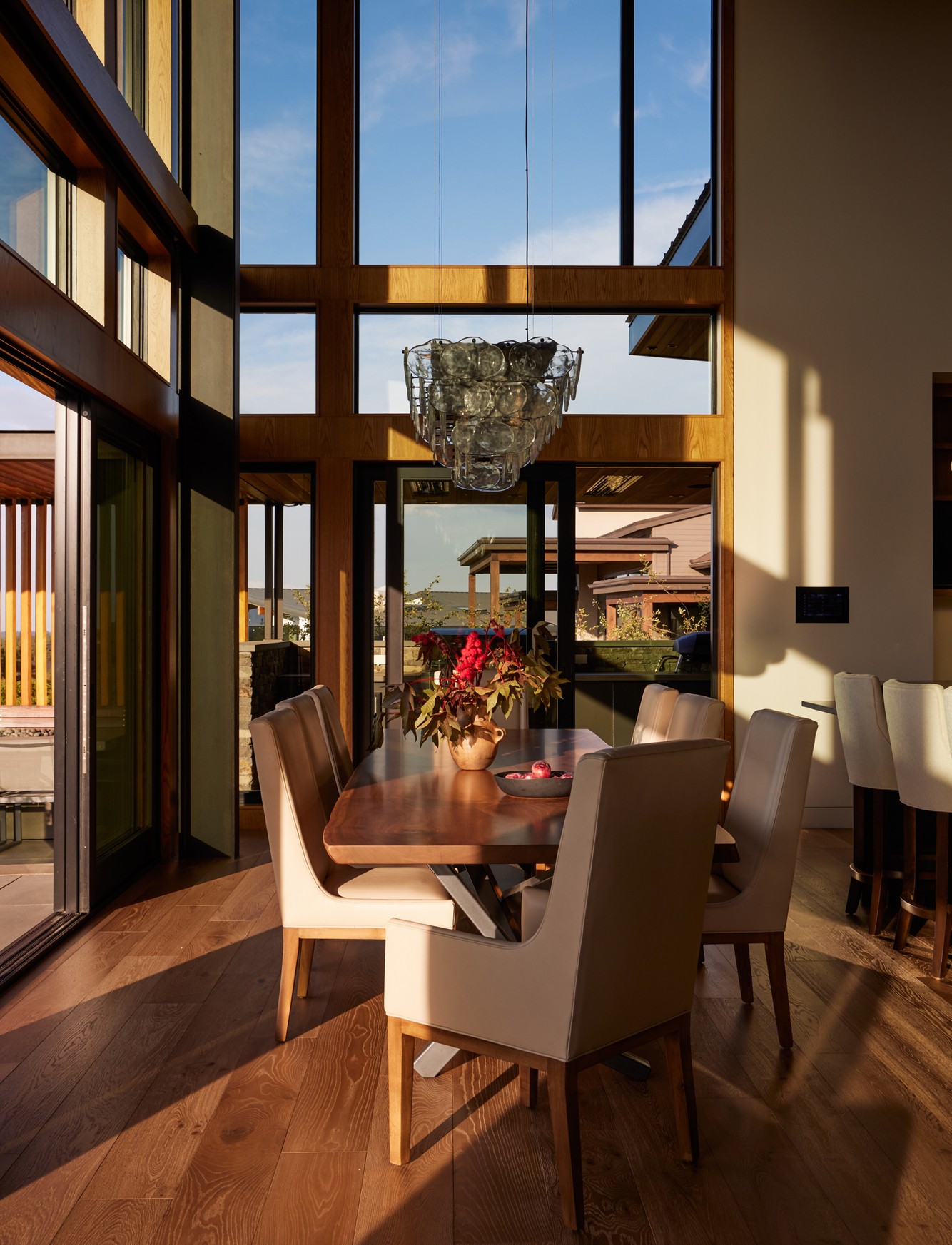
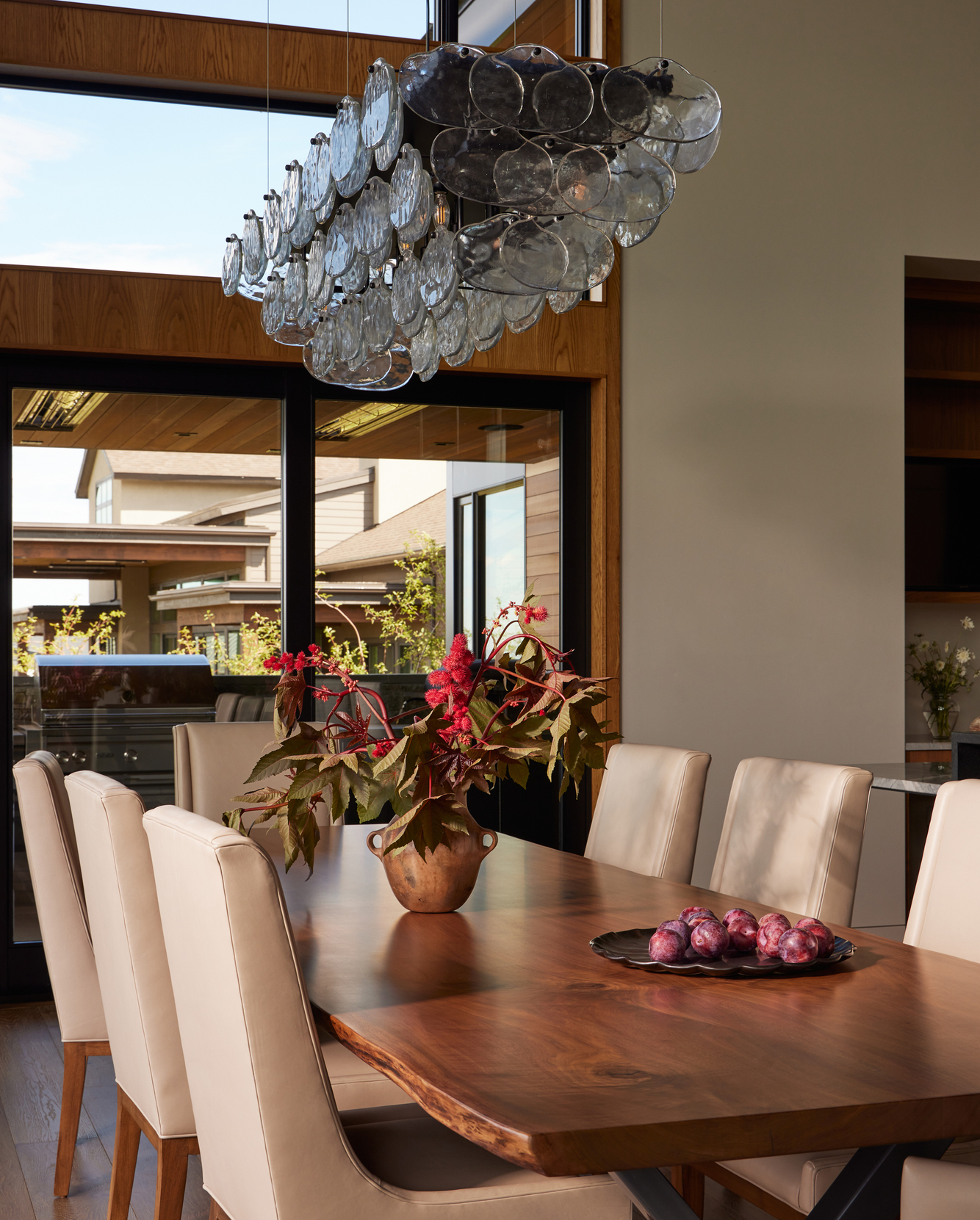
He shoots for time of day rather than convenience. The exterior is captured at blue hour, that narrow window when the sky deepens to cobalt and the interior lights glow warm gold—a combination you can only catch for about fifteen minutes a night. The dining room is timed for low golden light raking across the floor, turning ordinary oak planks into something luminous.
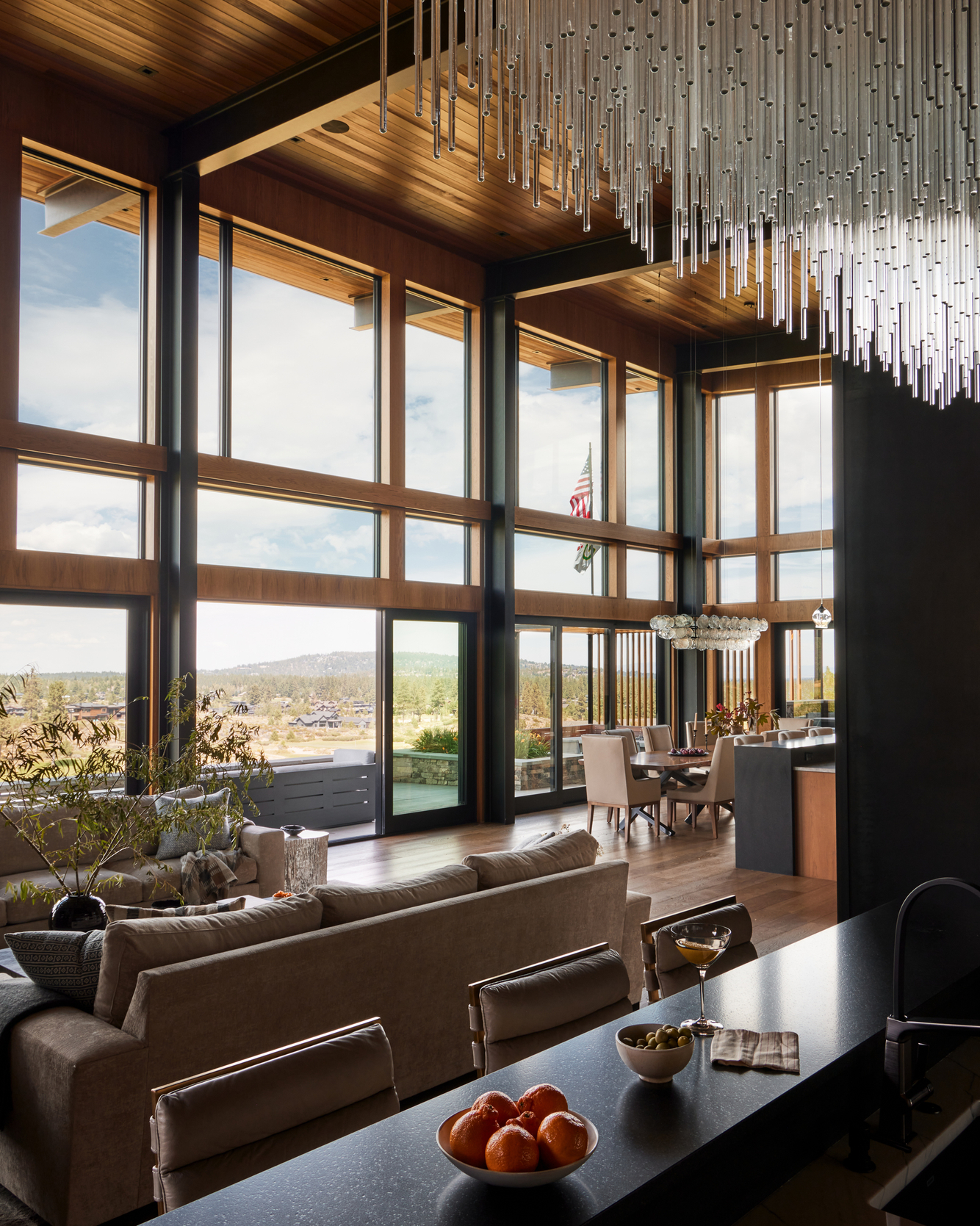
He frames the wide shots architecturally. In the great room, the two-story window wall and the cascading glass-rod chandelier are composed to emphasize the height of the space, the eye drawn upward along the steel mullions. The verticals are true—which sounds basic, but it's the line between a snapshot and a photograph.
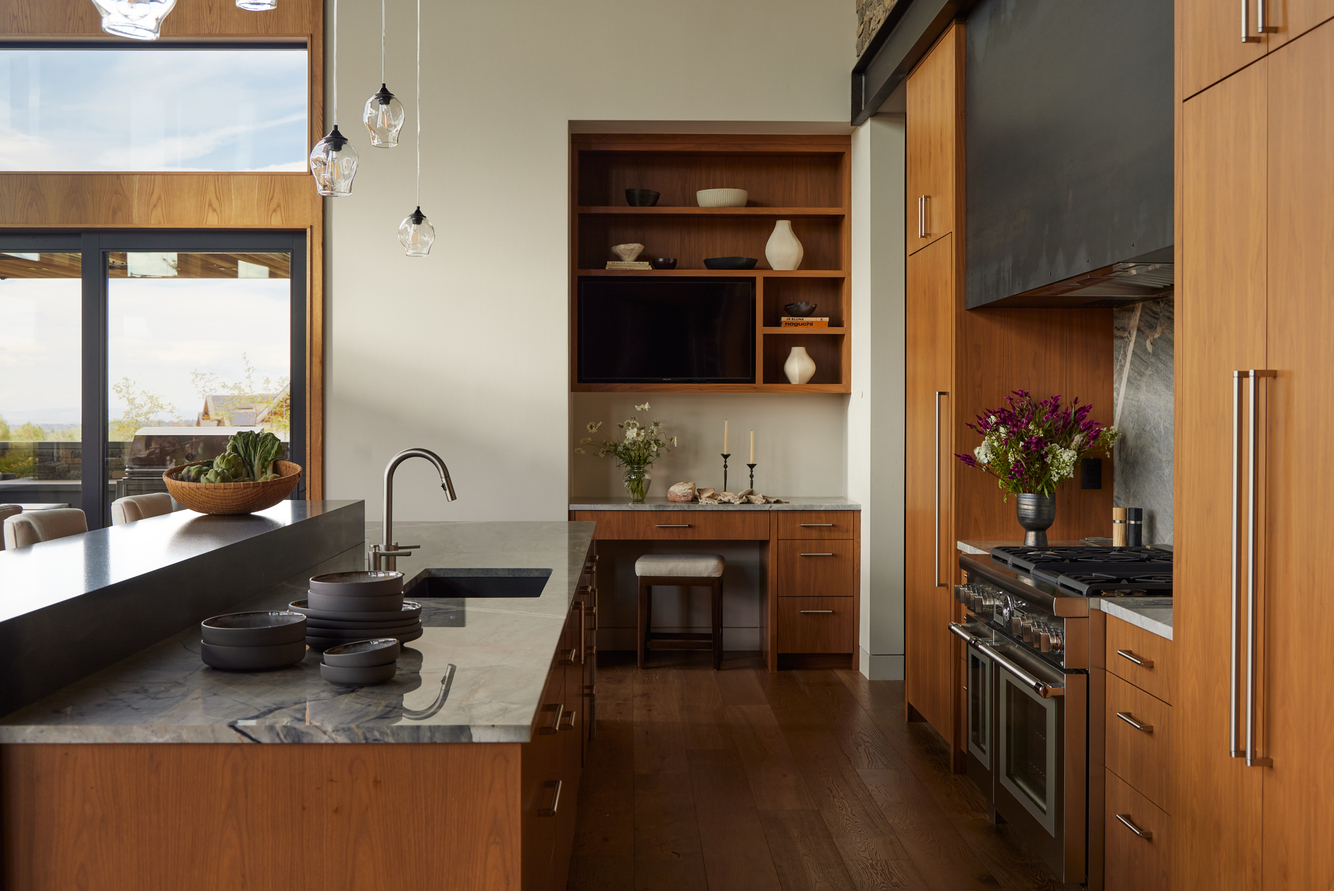
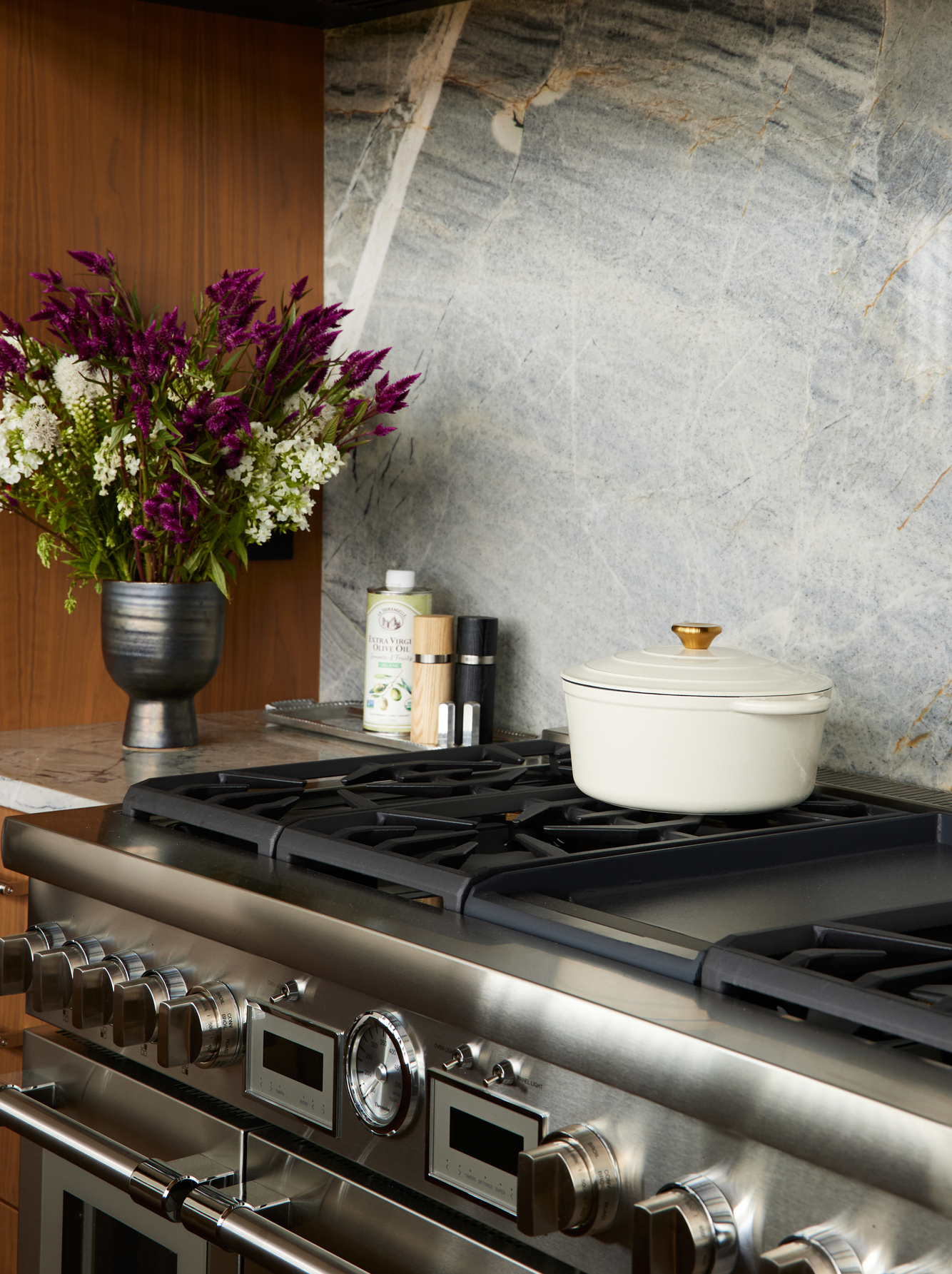
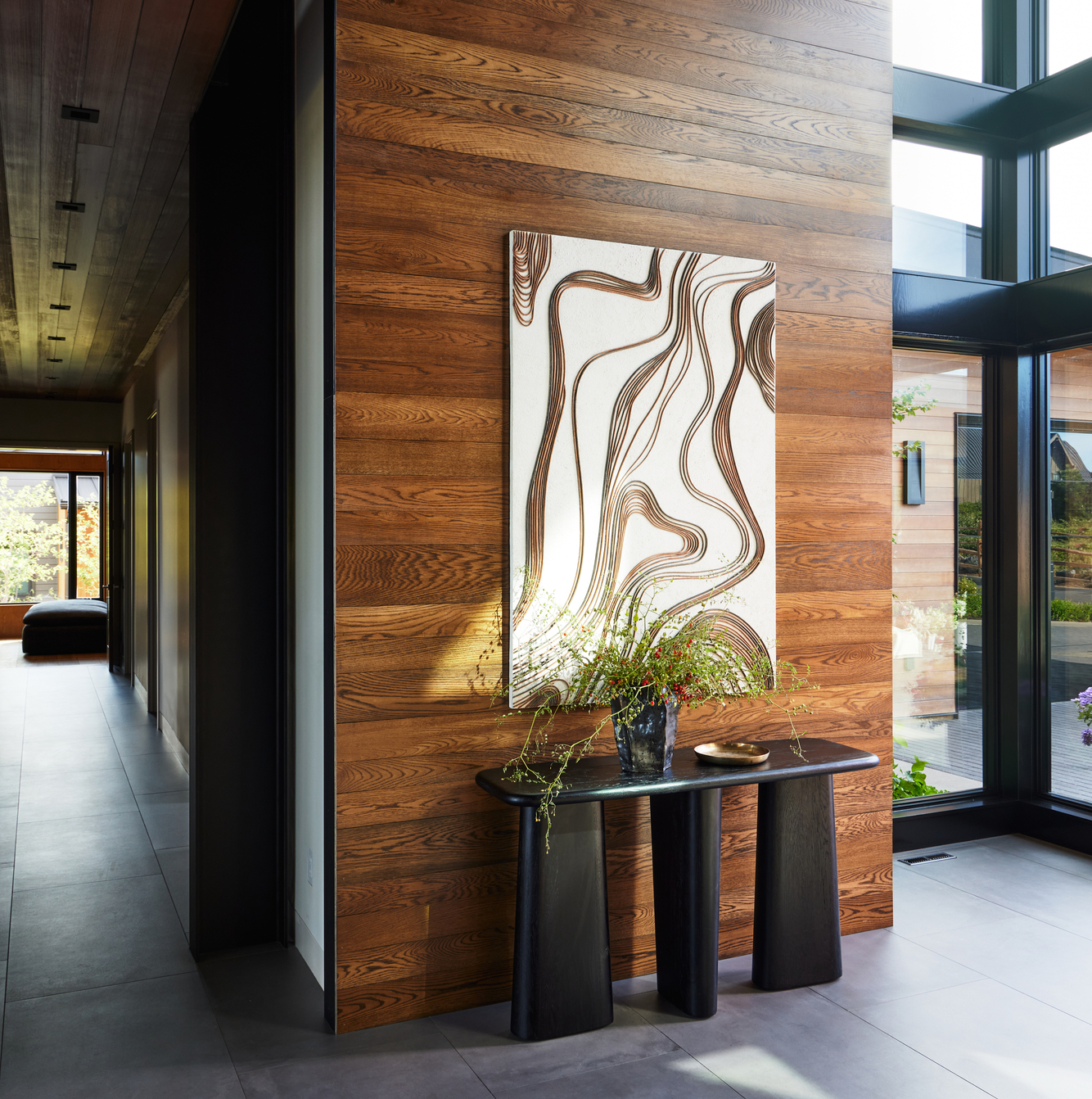
And he sweats the small scenes. The single martini and bowl of olives on the kitchen island. The deliberate stack of art monographs on the coffee table. The loose, gestural floral arrangements—berried branches, seed pods, a spray of red—that recur from the entry console to the powder room. These are the touches that imply someone lives here and just stepped out of frame.
Our Favorite Details
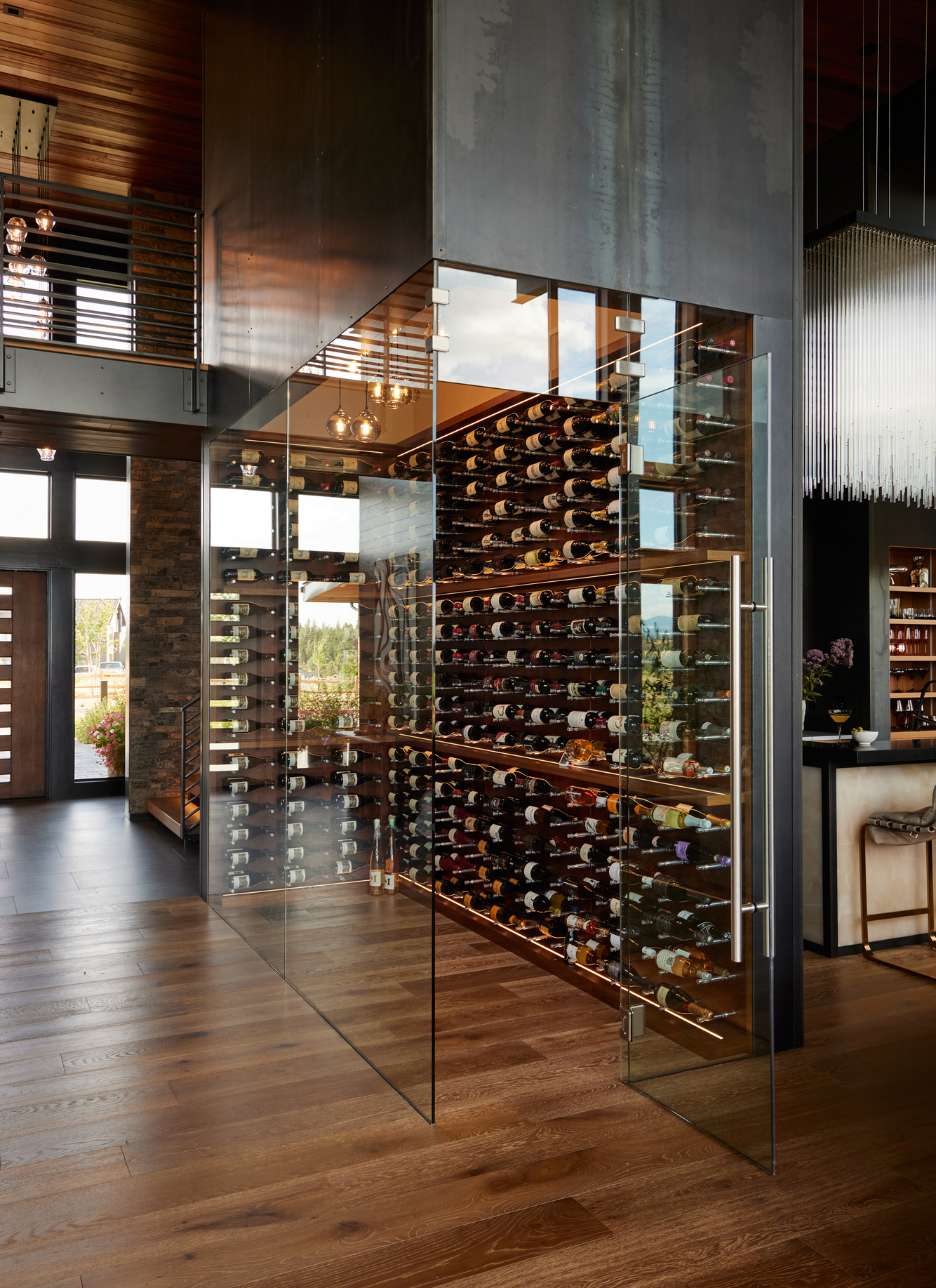
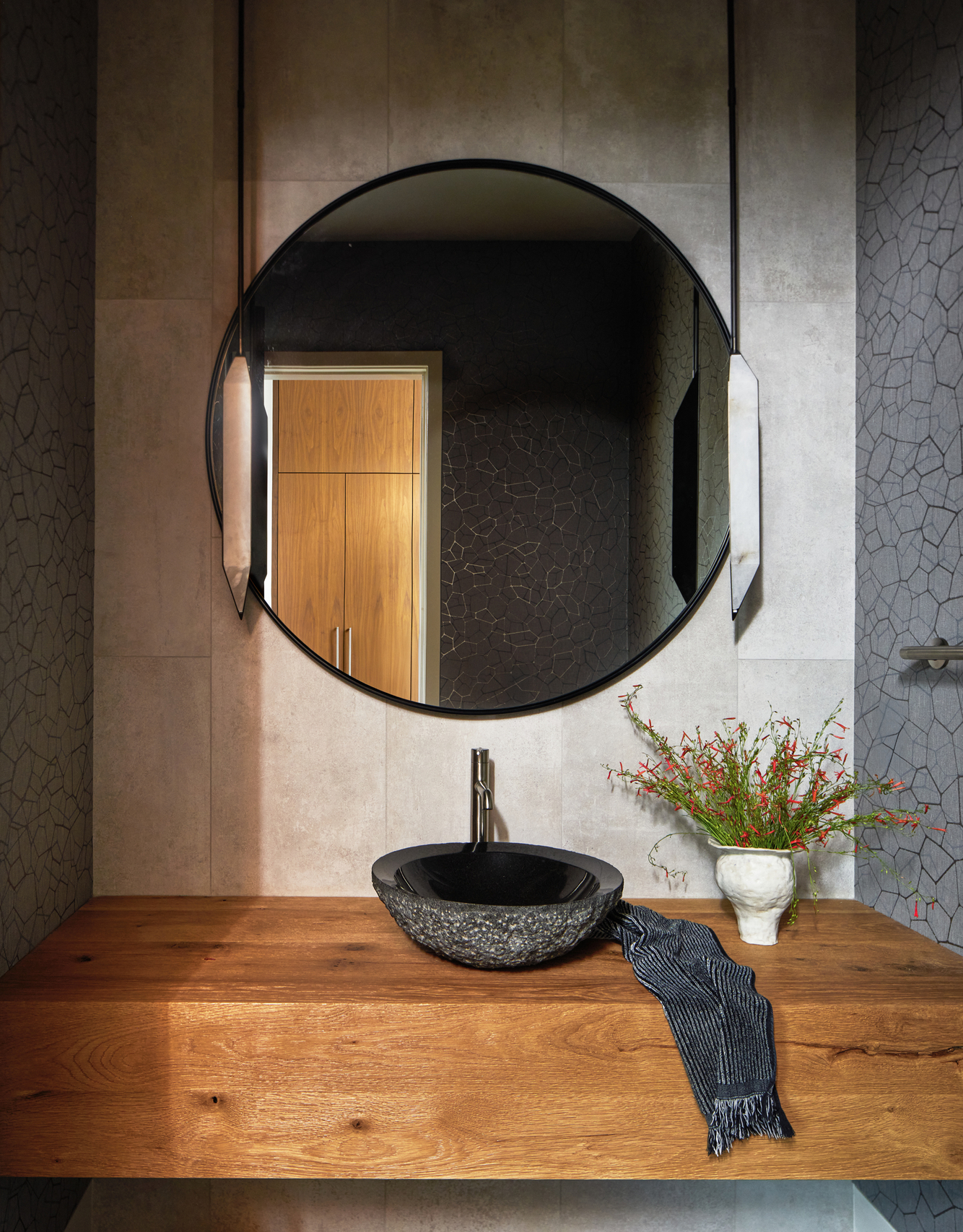
Two of the strongest frames aren't the big rooms at all. The glass-walled wine room—hundreds of bottles glowing behind a seamless enclosure—is a lighting problem disguised as a wine cellar, with reflections to manage on every surface; Barberis lets it read clean and luminous without a single distracting hotspot. And the powder room, with its live-edge oak floating vanity, black stone vessel sink, and round dark mirror against textured stone, is essentially a still life—the kind of shot a photographer with a product background knows how to build.
Technique and Talent Come Together
Architectural photography lives or dies on a few unglamorous fundamentals: straight lines, controlled light, and styling that feels human. George delivers all three here without letting any of them call attention to itself. The technique disappears, and what's left is the house—calm, warm, and exactly as Van Tassel's team intended it to feel.